Home Safety Checklist for Seniors Living Independently
Use this home safety checklist for seniors to review each room, plan family check-ins, set privacy-first safe zones, and prepare for emergencies.
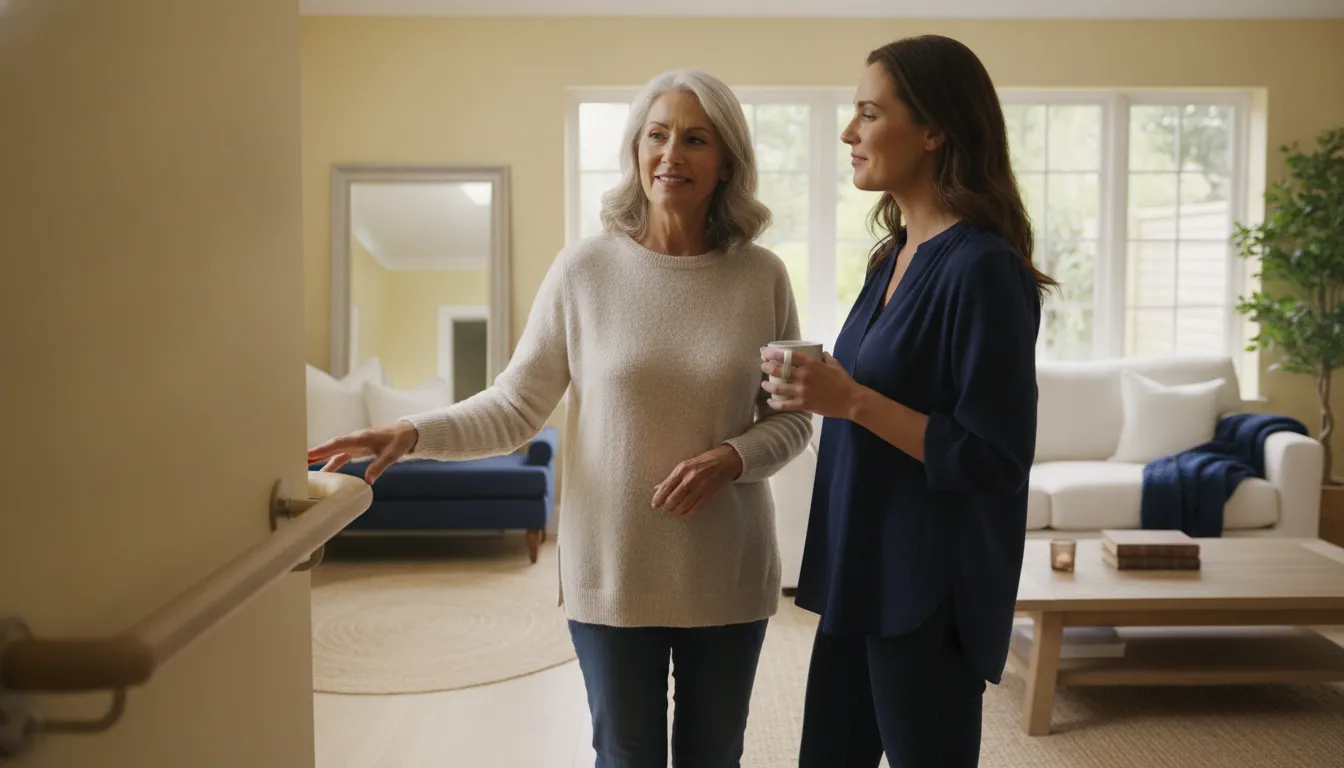
Living independently can work best when safety planning is practical, collaborative, and respectful of the older adult's choices. A room-by-room review helps families notice everyday hazards, agree on communication routines, and prepare for emergencies without turning the home into a monitored space.
A home safety checklist for seniors should cover clear walking paths, reliable lighting, secure bathroom and stair features, kitchen and entryway routines, agreed family check-ins, permission-based safe zones, and accessible emergency contacts. It supports preparedness and coordination, but it is not a substitute for a professional home-safety assessment, medical care, or emergency services.
The National Institute on Aging notes that a few home changes can make independent living easier and safer, including securing carpets and removing area rugs (NIA home safety guidance). Start by looking at each space together, then connect those household details to a plan everyone understands and can follow.
What belongs on a home safety checklist for seniors?
A useful checklist starts with the older adult's routines, priorities, and goals. Many people want to age in place, remaining in their own homes as they get older, while keeping as much independence as possible. The purpose is not to inspect a person or take control of the household. It is to identify practical changes that make everyday movement, communication, and preparation easier.
Begin with a walk-through at the time of day when the home is most used. Ask what feels awkward, dim, hard to reach, or easy to overlook. Invite the person who lives there to lead the conversation. A family member may notice a loose rug, crowded walkway, or difficult doorway. But the resident can explain whether a proposed change would actually help or create a new inconvenience.
The National Institute on Aging notes that a few home changes may make independent living easier and safer. Its guidance includes removing area rugs and securing carpets firmly to the floor, as well as improving the front entrance when needed. For example, a ramp with handrails may be appropriate for some homes, but individual layout and mobility needs should be considered before making a modification.
A practical baseline for the walk-through
- Clear paths: Keep routes between the bedroom, bathroom, kitchen, and exit free of clutter, loose items, and unsecured flooring.
- Light and visibility: Check that stairs, hallways, entrances, and nighttime routes can be illuminated without awkward reaching or navigating in the dark.
- Reach and balance: Place frequently used items where they can be reached comfortably, and note areas where a stable handhold or professional assessment may be helpful.
- Communication: Agree on who should be contacted for routine help, what a check-in means, and what to do in an emergency. These arrangements should support independence rather than replace the person's judgment.
| Area | First checks | Who to involve |
|---|---|---|
| Movement paths | Clear clutter and loose rugs. | Resident and trusted family member. |
| Daily-use rooms | Improve reach and lighting. | Resident and family. |
| Communication | Agree on check-ins. | Resident and trusted contacts. |
| Emergency readiness | Review exits and supplies. | Resident, family, and neighbors. |
Review the checklist together after changes are made. A home safety plan is a living household agreement, not a one-time judgment. If there are individualized mobility, medical, or home-access concerns, seek guidance from a qualified professional. For an emergency, contact local emergency services.
Room-by-room home safety checklist for seniors
Use this checklist as a practical walkthrough, then discuss any needed changes with the person who lives in the home. For individualized guidance, a qualified home-safety professional can help account for the home's layout and the resident's needs.
Entryway
- Check front steps for broken or uneven surfaces.
- Keep the approach to the door clear and well lit. Turn on the porch light at night or when returning home after dark.
- Consider a secure handrail or grab bar near the door for balance while locking or unlocking it.
- If a ramp is needed, consider one with handrails. The National Institute on Aging includes this as a front-door safety recommendation.
-
Living room
- Arrange furniture, including low coffee tables, so walking routes remain open.
- Keep electrical cords near walls and away from paths.
- Check that chairs and sofas are a comfortable height for sitting down and standing up.
- Store frequently used items at waist level or within easy reach.
-
Hallways and flooring
- Remove loose throw rugs and small area rugs. Secure remaining carpets firmly to the floor.
- Keep books, papers, clothing, shoes, and other loose items out of walking areas.
- Use good lighting along long halls, with switches at each end where practical. Consider plug-in motion-activated lights for pathways.
- Do not walk across a slippery floor immediately after it has been washed.
-
Stairs
- Keep every step free of objects and loose items.
- Check that handrails are secure on both sides of the stairs.
- Provide good lighting at the top and bottom, with switches at both ends.
- Consider motion-activated lighting for a stairwell or nearby pathway.
-
Bedroom
- Place a night-light and a light switch close to the bed.
- Keep a flashlight by the bed in case a power outage makes it necessary to get up.
- Keep a landline or well-charged phone within easy reach.
-
Bathroom
- Install securely mounted grab bars near the toilet and on both sides of the tub or shower where appropriate.
- Use nonskid mats or strips on surfaces that may get wet.
- Leave a bathroom light on at night or use an automatic night-light.
-
Kitchen
- Store frequently used pots, pans, and utensils where they are easy to reach.
- Clean spills immediately.
- When helpful, prepare food while seated to reduce fatigue or loss of balance.
-
Outdoor areas
- Keep the lawn, porch, and deck clear of debris such as fallen branches.
- Add nonslip material to outdoor stairs and treat icy walkways with ice melt or sand in winter.
- Review outdoor lighting and check walkways after weather changes.
These recommendations are adapted from the National Institute on Aging's room-by-room home safety guidance and its home safety tips for older adults.
| Room | Start with |
|---|---|
| Entry and halls | Clear paths, secure floors, and bright switches |
| Bedroom and bathroom | Night lighting, reachable phone, and stable wet-area supports |
| Kitchen and living room | Easy reach, open routes, and fast spill cleanup |
| Outdoor areas | Clear steps, nonslip surfaces, and seasonal lighting |
How can families support independent living without taking over?
Start with a conversation, not a schedule imposed from outside. The older adult should help decide what support is useful, which updates feel comfortable, and who should be involved. Planning ahead can make those decisions clearer while everyone has time to discuss preferences, responsibilities, and possible changes. The National Institute on Aging recommends talking with family, friends, and caregivers about the support needed to remain at home, then revisiting the plan as needs change.
Agree on routines and responsibilities
Turn general concern into a simple agreement. Decide who handles tasks such as grocery coordination, transportation, home projects, appointment reminders, or seasonal preparation. Write down what the older adult manages independently and what others will do only when asked. This prevents several relatives from duplicating effort while leaving another responsibility unclear.
Communication routines should also be specific. A family might agree on a weekly call, a message after an appointment, or a check-in when someone arrives home. The routine should be predictable without requiring constant updates. For ideas on creating practical family check-in routines, focus on intentional confirmations and clear sharing permissions, not passive monitoring.
Make escalation respectful and proportional
Agree in advance on what happens when a routine is missed. A first step might be a friendly message, followed by a phone call to the person. Then contact with an agreed backup person if there is a genuine concern. The older adult should know this sequence and have a voice in it. A missed check-in is not automatically an emergency, and a coordination tool does not replace direct judgment or emergency services.
Use permission-based communication and location awareness only for the people, places, and situations everyone has approved. That balance keeps support available while protecting dignity, privacy, and the right to live independently.
How to use safe zones and permission-based location awareness
A safe zone is a place that matters to the household, such as an older adult's home, a family member's workplace, or a regular appointment location. Used thoughtfully, it can reduce unnecessary messages while helping trusted people coordinate arrivals and departures. The goal is shared awareness and peace of mind, not surveillance.
Agree on the boundaries first
Start with a conversation about what information is useful, who should receive it, and when location awareness should be active. The older adult should choose the trusted contacts included and understand what arrival or departure alerts mean. Permission-based visibility protects dignity because sharing is intentional rather than imposed. Revisit the agreement if schedules, living arrangements, or comfort levels change.
For a practical planning framework, review how to plan trusted home safe zones around the places your family uses most.
Use alerts for coordination, not conclusions
An arrival alert can confirm that someone reached home after an appointment. A departure alert can help a family member know when to send a reminder, prepare for a visit, or adjust a shared plan. Decide in advance who will respond to an alert and what response is reasonable. One person may simply acknowledge it, while another may send a message if an expected arrival does not occur.
Keep privacy and limitations visible
Safe zones do not replace conversation, a home-safety assessment, medical care, or emergency services. Location sharing and alerts depend on the person's permissions, device, user actions, and connectivity. They do not detect falls or automatically determine that someone needs help. A user-triggered check-in is an intentional confirmation, not automatic wellness monitoring. Clear expectations keep the tool useful without turning it into an intrusive system.
Emergency preparation that supports peace of mind
Emergency preparation is easier to maintain when it is practical, visible, and agreed upon. Start with a short contact list that includes trusted family members, neighbors, the primary care office, the utility providers, and local emergency services. Keep a printed copy in an easy-to-find place, and store an updated version on a phone. In a real emergency, always call 911 first. A family coordination platform is not a substitute for professional response.
Walk through the home together and identify two ways out of the main living areas, if available. Make sure everyone knows where the electrical panel, water shutoff, and gas shutoff are located, and discuss who should handle them. Keep flashlights, spare batteries, necessary medications, drinking water, basic food, and important documents in a practical place that is easy to reach. Review supplies before severe weather seasons, during a move, or whenever household needs change.
Plan for changing needs
Planning ahead gives an older adult and their trusted circle time to make decisions while the person can express their preferences. The National Institute on Aging recommends considering both current and future support needs, discussing those needs with family, friends, and caregivers, and revisiting the plan as circumstances change. Sources: NIA guidance on aging in place.
Write down who checks the home after a storm, who helps arrange repairs, and who can provide transportation if normal routines are disrupted. Home-based support may include family, friends, and neighbors, supplemented by formal caregivers or community services. This is where senior care coordination can support clearer responsibilities without replacing the older adult's choices.
For individualized recommendations about accessibility, mobility, or health-related needs, consult a qualified professional. The goal is not to predict every problem. It is to create a calm, shared plan that protects independence and makes the next step clear when circumstances change.
When should a home safety plan be reviewed?
A home safety plan should be treated as a living agreement, not a one-time checklist. A practical cadence is to do a short monthly check, a more detailed seasonal review, and an additional review whenever something changes in the household.
Use a monthly check for small changes
Once a month, walk through the main routes and ask what has changed. Look for new clutter, loose cords, furniture that narrows a pathway, or items that are harder to reach. Check that frequently used seating remains easy to get in and out of, and confirm that a flashlight and a well-charged phone are still available near the bed. Keep the conversation collaborative. The goal is to notice friction early, not to inspect or supervise someone's daily life.
Review seasonally and before predictable risks
At the start of winter, check outdoor steps and walkways, lighting, and supplies for slippery conditions. Before periods of extreme heat, storms, travel, or extended time alone, review emergency contacts, exit routes, communication plans, and any agreed family check-ins. A seasonal review is also a useful time to replace expired supplies and confirm that everyone knows what to do if the power goes out.
Review after a meaningful change
Do not wait for the next monthly date after a fall, illness, medication change, mobility change, renovation, move, or change in caregiving support. Revisit the plan with the older adult and the people they trust. The National Institute on Aging recommends revisiting aging-in-place decisions as needs change over time: planning should adapt as circumstances change.
This household review is not a clinical or professional home-safety assessment. When individualized guidance is needed, involve a qualified professional. In an emergency, contact emergency services directly.
Reserve Your Founding Member Spot
Frequently Asked Questions
What should a home safety checklist for seniors include?
Review each room for clear walking paths, secure flooring, useful lighting, reachable everyday items, and a way to contact a trusted person. Include family communication routines, agreed safe zones, emergency contacts, and a plan for reviewing changes together. The National Institute on Aging offers additional home-safety guidance.
How can families support independent living without being intrusive?
Start with a conversation about what support feels useful and what privacy the older adult wants to maintain. Agree on who handles specific tasks, when family members check in, and what action to take if a check-in is missed. A routine should support independence rather than create unwanted surveillance.
What is a safe zone in a family safety plan?
A safe zone is an agreed location, such as home, where trusted family members can coordinate arrivals and departures with permission. It can help clarify expectations about communication, but it does not detect a fall, monitor health, or guarantee an emergency response. Keep location visibility consent-based and review permissions together.
How often should a senior home safety plan be reviewed?
Review it when routines, mobility, household layout, support needs, or contact information changes. A regular monthly check can catch simple issues, while seasonal reviews can address lighting, outdoor paths, weather, and emergency supplies. Revisit the plan collaboratively as needs change, and ask a qualified professional for individualized guidance when appropriate.
What should happen during an emergency?
Use the agreed communication plan, contact emergency services when immediate help is needed, and share the relevant address and contact details. Family coordination tools can support intentional check-ins and messaging, but they are not a substitute for emergency services, medical care, or professional home-safety assessment.
Support a privacy-first family safety routine
SafeZone365 can help families coordinate privacy-first communication, trusted safe zones, and intentional check-ins while supporting independent living with dignity.
Explore the founding-member option when you are ready to compare privacy-first family coordination tools.